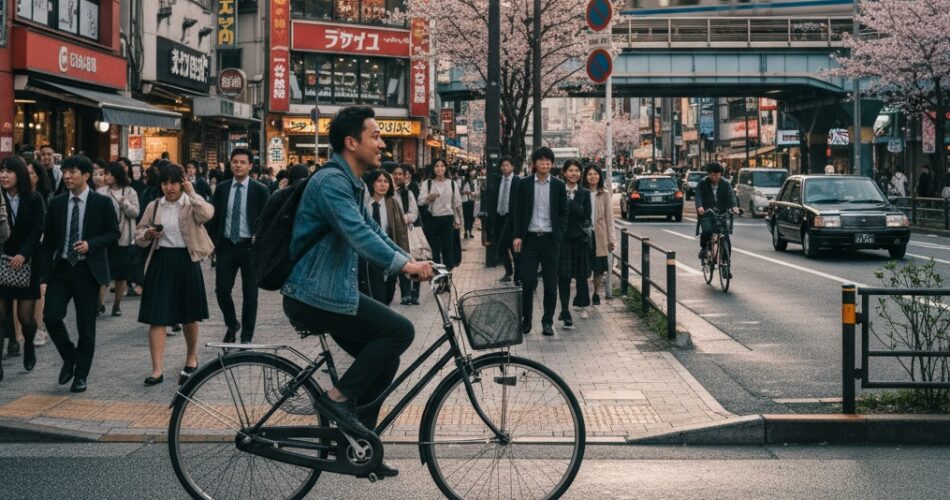
Exploring Japan by bicycle (自転車, jitensha) offers a unique and intimate perspective on the country. It allows you to discover quiet backstreets, meander along scenic riverbanks, and explore neighborhoods at a human pace. Many tourist destinations and cities have excellent rental options, making cycling an accessible and rewarding way to see the sights. However, Japan has very specific rules and etiquette for cyclists that are important to follow for your own safety and to show respect for local customs.
This comprehensive guide provides all the Japanese you need for a fantastic cycling experience. We will cover how to rent a bike, the crucial rules of the road, the all-important etiquette of bicycle parking, and what to do if you run into any trouble along the way.
Chapter 1: Renting a Bicycle
Renting a bike is usually a straightforward process. You can find rental shops (often called レンタサイクル, rentasaikuru) near train stations and in popular tourist areas. Many cities also have automated bike-sharing systems. You will likely need to show some ID (like your passport) and fill out a simple form. You’ll often be asked how long you want to rent the bike for, as rates can be hourly or daily.
— At the Rental Shop —
自転車を一台借りたいのですが。
じてんしゃをいちだいかりたいのですが。
Jitensha o ichidai karitai no desu ga.
I would like to rent one bicycle.
自転車 (jitensha) = Bicycle
を (o) = Object marker
一台 (ichidai) = One (for machines)
借りたいのですが (karitai no desu ga) = I would like to rent…
一日いくらですか。
いちにちいくらですか。
Ichi-nichi ikura desu ka?
How much is it for one day?
一日 (ichi-nichi) = One day
いくらですか (ikura desu ka) = How much is it?
— Essential Rental Vocabulary —
自転車 (じてんしゃ) – Jitensha (Bicycle)
レンタサイクル – Rentasaikuru (Rental cycle)
一日 (いちにち) – Ichi-nichi (One day)
時間 (じかん) – Jikan (Hour)
ヘルメット – Herumetto (Helmet)
鍵 (かぎ) – Kagi (Key/Lock)
身分証明書 (みぶんしょうめいしょ) – Mibun shōmeisho (Identification / ID)
Chapter 2: Rules of the Road for Cyclists
In Japan, bicycles are legally classified as light vehicles and must follow the same basic rules as cars. This means you must ride on the **left side of the road**, with the flow of traffic. Riding on the sidewalk (歩道, hodō) is only permitted where indicated by specific signs, and even then, pedestrians always have the right of way. Riding under the influence of alcohol is strictly forbidden and carries severe penalties. Using a smartphone or headphones while riding is also illegal.
— Important Rules —
左側通行 (ひだりがわつうこう) – Hidarigawa tsūkō
Travel on the left side of the road.
歩行者優先 (ほこうしゃゆうせん) – Hokōsha yūsen
Pedestrians have priority.
飲酒運転禁止 (いんしゅうんてんきんし) – Inshu unten kinshi
Drunk driving is prohibited.
二人乗り禁止 (ふたりのりきんし) – Futari-nori kinshi
Riding with two people (on a one-person bike) is prohibited.
— Key Vocabulary for Rules —
交通ルール (こうつうルール) – Kōtsū rūru (Traffic rules)
車道 (しゃどう) – Shadō (Roadway)
歩道 (ほどう) – Hodō (Sidewalk)
自転車レーン (じてんしゃレーン) – Jitensha rēn (Bicycle lane)
信号 (しんごう) – Shingō (Traffic light)
止まれ (とまれ) – Tomare (Stop sign)
Chapter 3: Bicycle Parking
This is one of the most important aspects of cycling in Japan. You cannot park your bicycle just anywhere. Illegally parked bikes, especially around train stations and busy commercial areas, are regularly removed (撤去, tekkyo) by the city. Always look for a designated bicycle parking area (駐輪場, chūrinjō). These can be free or paid (often 100-200 yen for a few hours). Many paid lots have racks that lock your wheel in place, which you pay to release when you return.
— Finding a Place to Park —
駐輪場はどこですか。
ちゅうりんじょうはどこですか。
Chūrinjō wa doko desu ka?
Where is the bicycle parking area?
駐輪場 (chūrinjō) = Bicycle parking area
は (wa) = Topic marker
どこですか (doko desu ka) = Where is it?
ここに停めてもいいですか。
ここにとめてもいいですか。
Koko ni tomete mo ii desu ka?
Is it okay to park here?
ここに (koko ni) = Here
停めてもいいですか (tomete mo ii desu ka) = Is it okay if I park?
— Essential Parking Vocabulary —
駐輪場 (ちゅうりんじょう) – Chūrinjō (Bicycle parking area)
駐輪禁止 (ちゅうりんきんし) – Chūrin kinshi (No bicycle parking)
有料 (ゆうりょう) – Yūryō (Paid / Toll)
無料 (むりょう) – Muryō (Free of charge)
撤去 (てっきょ) – Tekkyo (Removal / Impounding)
Chapter 4: Dealing with Problems
Even on a short ride, you might encounter a mechanical issue. The most common problem is a flat tire (パンク, panku). If this happens, you will need to find a local bicycle shop (自転車屋, jitensha-ya) for repairs. Most neighborhoods will have one. If you’re unsure where to go, you can ask for directions at a local shop or police box (交番, kōban).
— When You Have a Problem —
パンクしました。近くに自転車屋はありますか。
ぱんくしました。ちかくにじてんしゃやはありますか。
Panku shimashita. Chikaku ni jitensha-ya wa arimasu ka?
I have a flat tire. Is there a bicycle shop nearby?
パンクしました (panku shimashita) = (I) got a flat tire.
近くに (chikaku ni) = Nearby
自転車屋 (jitensha-ya) = Bicycle shop
はありますか (wa arimasu ka) = Is there?
空気を入れられますか。
くうきをいれられますか。
Kūki o ireraremasu ka?
Can I put air (in the tires)?
空気 (kūki) = Air
を (o) = Object marker
入れられますか (ireraremasu ka) = Can (I) put in?
— Essential Problem-Solving Vocabulary —
自転車屋 (じてんしゃや) – Jitensha-ya (Bicycle shop)
パンク – Panku (Flat tire / Puncture)
修理 (しゅうり) – Shūri (Repair)
空気 (くうき) – Kūki (Air)
チェーン – Chēn (Chain)
ライト – Raito (Light)
Read More: