Konnichiwa! Ready for your next adventure? Let’s journey just south of Tokyo to one of Japan’s most charming and stylish cities: Yokohama. As Japan’s second-largest city and a major port (港, みなと, minato), Yokohama offers a unique, international atmosphere that sets it apart from all other Japanese cities.
This guide will introduce you to Yokohama’s fascinating history as Japan’s window to the world, its breezy culture, stunning sights, and delicious food, all while helping you on your journey learning Japanese along the way! Let’s set sail!
A Glimpse into Yokohama’s History
Yokohama’s story is one of rapid and dramatic change. Until the 1850s, it was just a tiny, sleepy fishing village. Its destiny changed forever in 1854 when Commodore Matthew Perry arrived with his “Black Ships,” leading to the signing of a treaty that opened Japan to the world after centuries of isolation (鎖国, さこく, sakoku). Yokohama was designated as one of the first ports open to foreign trade (貿易, ぼうえき, bōeki). Almost overnight, it transformed into a bustling international hub, with traders and diplomats from around the globe establishing homes, businesses, and a unique blend of cultures that defines the city to this day.
Yokohama’s Culture
Yokohama’s culture is shaped by the sea and its history as a melting pot. Unlike the old-meets-new dynamic of Tokyo, Yokohama’s identity is a fusion of Japanese, Chinese, and Western influences. This is immediately visible in its architecture, from the grand European-style buildings in the Yamate district to the vibrant, bustling gates of Japan’s largest Chinatown. This blend creates a truly international (国際的, こくさいてき, kokusaiteki) atmosphere you can’t find anywhere else in Japan.
The city’s vibe is noticeably more relaxed and open than its massive neighbor, Tokyo. Life in Yokohama is oriented around its beautiful waterfront. With wide-open parks, breezy promenades, and stunning bay views, there’s a sense of space and calm. This seaside setting has also made Yokohama a creative hub, known for its thriving arts scene, numerous museums, and a deep, historical connection to jazz music in Japan, which first entered the country through this very port.
This unique history has cultivated a forward-thinking and welcoming spirit. From the futuristic skyline of Minato Mirai 21 to the fashionable and historic Motomachi Shopping Street, the city embraces innovation while celebrating its multicultural heritage. It’s a city that feels both historic and modern, Japanese and distinctly global, all at once.
Must-See Sights in Yokohama
From stunning waterfronts to historical gardens, Yokohama is full of beautiful sights:
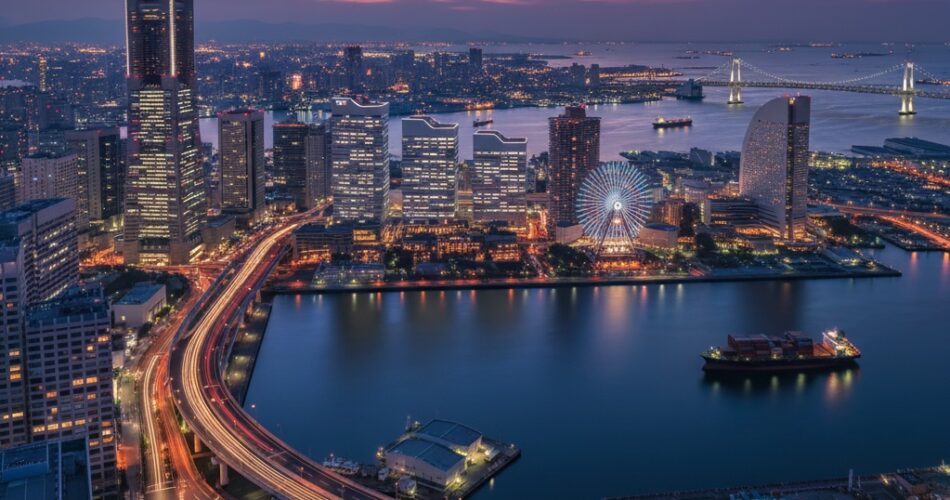
- Minato Mirai 21 (みなとみらい21): The stunning, futuristic waterfront that is the face of modern Yokohama. It’s home to the Landmark Tower (one of Japan’s tallest buildings), the Cosmo Clock 21 Ferris wheel, and numerous shopping malls.
- Yokohama Chinatown (横浜中華街): The largest and most vibrant Chinatown in Japan. Pass through one of the spectacular gates and immerse yourself in a world of delicious street food, authentic restaurants, and fascinating temples like the Kanteibyo.
- Sankeien Garden (三溪園): A vast and breathtakingly beautiful traditional Japanese garden. It features a collection of historic buildings from across Japan, including a stunning three-storied pagoda, all skillfully arranged around a central pond.
- Yokohama Red Brick Warehouse (横浜赤レンガ倉庫): These two handsome, historic warehouses from the port’s early days have been beautifully repurposed into a trendy complex with unique shops, restaurants, and a year-round event space.
- Yamashita Park (山下公園): A lovely, spacious public park stretching along the waterfront. It offers great views of the port, the Yokohama Bay Bridge, and the historic NYK Hikawa Maru ocean liner, which is permanently docked here.
- Yamate District (山手): Walk through the hilly streets of the former foreign settlement to see beautifully preserved Western-style residences from the Meiji and Taisho periods. Many are open to the public as museums.
Unique Experiences & Things to Do
Engage with Yokohama’s creative and playful side with these unique activities:
- Make Your Own Instant Ramen: Visit the Cup Noodles Museum for a fun and creative experience. Learn about the history of instant ramen and design your very own custom cup of noodles, from the soup flavor to the toppings.
- Travel Back in Time for Ramen: At the Shin-Yokohama Ramen Museum, you can explore a stunningly detailed replica of a Tokyo street from 1958 and sample famous regional ramen dishes from across Japan in mini-sized portions.
- See the Skyline from the Sea: Take a “Sea Bass” water bus cruise around the bay for the best possible views of the entire Minato Mirai skyline. It’s especially magical at night when all the buildings are lit up.
- Stroll Down Motomachi Shopping Street: Experience a piece of Yokohama’s international history on this charming, European-style shopping street. It’s known for its high-end boutiques, bakeries, and cafes.
- Listen to Live Jazz: Tap into Yokohama’s soul by visiting one of its many historic jazz clubs. The city has been the center of Japan’s jazz scene for decades, and you can still find incredible live performances nightly.
Yokohama’s Food Scene
Thanks to its international history, Yokohama’s food scene is diverse and delicious:
- Shumai (シウマイ): While found elsewhere, shumai (steamed pork dumplings) are a Yokohama institution, thanks to the famous brand Kiyoken. Grabbing a shumai bento box at the train station is a classic Yokohama experience.
- Sanmamen (サンマーメン): This is Yokohama’s very own soul food ramen. It consists of thin noodles in a soy-based soup, topped with a thick, savory stir-fry of bean sprouts and other vegetables. It’s a hearty and delicious local favorite.
- Gyunabe (牛鍋): A delicious beef hot pot that became popular in Yokohama during the Meiji Restoration. As one of the first places to adopt Western customs, Yokohama was a pioneer in Japan’s beef-eating culture, and this dish is a tasty piece of that history.
- Chinese Cuisine (中華料理): You can’t talk about Yokohama food without mentioning Chinatown. Beyond fine dining, be sure to try street food classics like delicious steamed meat buns (肉まん, nikuman) and crispy sesame balls (胡麻団子, goma dango).
— Useful Phrase in Yokohama —
中華街へはどう行きますか。
ちゅうかがいへはどういきますか。
Chūkagai e wa dō ikimasu ka?
How do I get to Chinatown?
中華街 (ちゅうかがい, chūkagai) = Chinatown
へはどう行きますか (へはどういきますか, e wa dō ikimasu ka) = How do I go to?
— Language Corner Yokohama —
港 (みなと, minato) – Port, harbor
国際的 (こくさいてき, kokusaiteki) – International
貿易 (ぼうえき, bōeki) – Foreign trade
倉庫 (そうこ, sōko) – Warehouse
Japanese for Your Yokohama Adventures
— At the Waterfront (港にて) —
船 (ふね, fune) – Ship, boat
海 (うみ, umi) – Sea, ocean
夜景 (やけい, yakei) – Night view
公園 (こうえん, kōen) – Park
Useful phrase
夜景がきれいですね。
やけいがきれいですね。
Yakei ga kirei desu ne.
The night view is beautiful, isn’t it?
— In Chinatown (中華街にて) —
肉まん (にくまん, nikuman) – Steamed meat bun
お土産 (おみやげ, omiyage) – Souvenir
食べ歩き (たべあるき, tabe-aruki) – Eating while walking / Street food snacking
Useful phrase
おすすめはどれですか。
おすすめはどれですか。
Osusume wa dore desu ka?
Which one do you recommend?
— At a Museum (博物館にて) —
入場券 (にゅうじょうけん, nyūjōken) – Admission ticket
展示 (てんじ, tenji) – Exhibit
体験 (たいけん, taiken) – Hands-on experience
Useful phrase
チケット売り場はどこですか。
ちけっとうりばはどこですか。
Chiketto uriba wa doko desu ka?
Where is the ticket counter?
Read More: